March: A Brief Introduction
Basic information first! Lets read some basic and old facts that we already know. March is the third month in both, the Gregorian and Julian calendar. It has 31 days. It hosts the March equinox on the 20th or on the 21stof March which astronomically marks the beginning of spring in the Northern Hemisphere and autumn in the Southern Hemisphere.
The month also has many relgious festivals and important days around the world. It is also pretty famous for its unpredictable weather conditions which change from time to time. There are many sayings which reflect upon the unpredictable weather in March.
One popular saying about March's weather in the Northern Hemisphere is:
History
March is named after Martius, the first month in the old Roman calendar. It was also named after Mars, the Roman god of war and an ancestor of Roman people through his sons Romulus and Remus. The month Martius was the beginning of the season of warfare.
March 1st was also marked as the beginning of the numbered year in Russia until the 15th century. Even today, many other cultures like Iran, Ethiopia, still celebrate the beginning of the New Year in March. March is the first month of spring in the Northern Hemisphere (North America, Europe, Asia and part of Africa) and the first month of fall or autumn in the Southern Hemisphere (South America, part of Africa, and Oceania).
Seasons
In the Northern Hemisphere, March is seen as a part of the spring season, whereas in the Southern Hemisphere, it is seen as a part of Autumn. The Indian Meteorological Department also considers March as a part of the summer or pre-monsoon season. Lets dive deep into the seasons of March.
In the Northern Hemisphere
March marks the beginning of spring, characterized by warmer temperatures, melting snow, and the sprouting of new vegetation. It's also when the vernal equinox occurs, usually around March 20th or 21st, leading to roughly equal day and night hours.
In the Southern Hemisphere
In contrast, March in the Southern Hemisphere is the beginning of autumn, with leaves changing colors and temperatures starting to cool down.
In India
The Indian Meteorological Department (IMD) classifies March as part of the summer or pre-monsoon season, which runs from March to May. However, in the traditional Hindu calendar, March is also considered part of the spring season (Vasant).
Important Dates
March has a lot of important dates and days, some which are known commomly and others, which exist, but still aren't known much to a lot people. Let us see the important events in the month of March. Given below are a few important dates and days in March.
🗓️ Fixed Dates
📅 Variable Dates
Festivals
March is a festival-filled month. During this period festivals are held in many places around the world. There is a table below giving a few names of the festivals and their description. In this section we shall focus on the festivals world wide as one part and the festivals in India as one part.
| Festival | Country | Description |
|---|---|---|
| St. Patrick's Day (Mar 17) | Ireland, USA, etc. | Honoring Saint Patrick, known for green parades and Irish culture |
| Nowruz (around Mar 20–21) | Iran, Central Asia | Persian New Year marking the spring equinox. |
| Commonwealth Day (2nd Monday of March) | Commonwealth countries | Observes unity and diversity of Commonwealth nations. |
| Carnival (dates vary, often in March) | Brazil, Caribbean, Europe | Festive season before Lent with parades and masquerades. |
| Festival | Description |
|---|---|
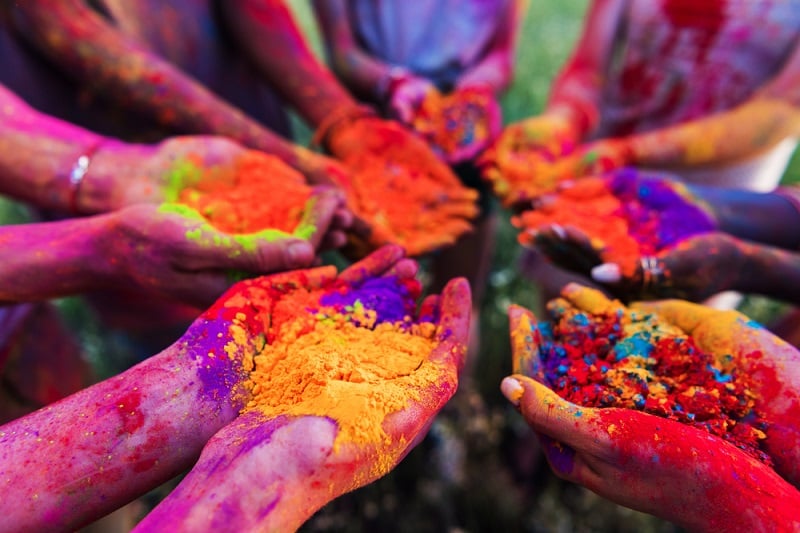
| Holi | The festival of colors, celebrating the victory of good over evil. |
| Mahashivratri | A Hindu festival dedicated to Lord Shiva, marked by night-long vigils. |
| Ram Navami | Celebrates the birth of Lord Rama (often falls late March or early April). |
| Gangaur | Rajasthani festival worshipping Goddess Parvati for marital bliss. |
| Chapchar Kut | Spring festival of Mizoram celebrating the end of jhum cultivation. |
| Ugadi (occasionally) | Telugu and Kannada New Year (if it falls in late March). |